
Muscle soreness and tightness after a challenging workout are common, especially after strength training, running, sports, or returning to exercise after time away. While some post-workout soreness resolves naturally, persistent discomfort can make movement uncomfortable and interfere with your next training session.
Physical therapists may use dry needling to address muscle pain, tightness, and trigger points. For active adults and athletes, it may be part of a broader recovery or physical therapy program when discomfort starts affecting movement or exercise.
Estimated reading time: 6 minutes
Key Takeaways
- Muscle soreness after workouts is common, but persistent discomfort can hinder exercise.
- Dry needling targets trigger points in muscles to relieve pain and is used by physical therapists as part of recovery programs.
- Research shows dry needling may reduce muscle pain and tightness, improve range of motion, and complement other physical therapy treatments.
- While dry needling helps with certain symptoms, it should not be viewed as a guaranteed solution for recovery or improved athletic performance.
- Consult a physical therapist to determine if dry needling fits your recovery needs; it’s not necessary for all post-workout soreness.
Table of contents
- What Is Dry Needling?
- How Can Dry Needling Help After Exercise?
- What Are the Benefits?
- Is Dry Needling Good for Muscle Soreness?
- When Should You Consider Dry Needling?
- What Happens During Dry Needling?
- How Long Does It Take to Feel Better?
- Can You Exercise After Dry Needling?
- Is Dry Needling Safe?
- Does Dry Needling Improve Athletic Performance?
- Frequently Asked Questions
- Get Back to Moving Comfortably
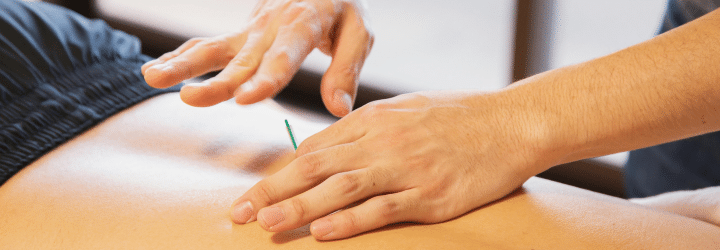
What Is Dry Needling?
Dry needling is a treatment technique that uses thin, sterile needles inserted into specific muscle areas. Physical therapists may target myofascial trigger points, which are sensitive areas within tight bands of muscle that can contribute to pain and restricted movement.
Dry needling and acupuncture use similar needles, but they follow different clinical approaches. In physical therapy, dry needling is based on an assessment of the muscles and other musculoskeletal structures involved in your symptoms.
At Physical Therapy & Injury Specialists, trigger point dry needling is one of several services you can use alongside physical therapy, sports therapy, therapeutic exercise, and other rehabilitation treatments.
Resource: my.clevelandclinic.org
How Can Dry Needling Help After Exercise?
Dry needling may help address muscle discomfort following strenuous physical activity. Research on its role in post-workout recovery is still developing, so it shouldn’t be viewed as a guaranteed way to recover faster.
A physical therapist can assess persistent or localized discomfort to determine whether dry needling is appropriate for your symptoms and recovery needs.
What Are the Benefits?
May Reduce Muscle Pain
Post-workout muscle pain can make everyday movement or subsequent exercise uncomfortable. Research on dry needling performed by physical therapists suggests it may provide short-term pain relief, though results vary by condition and treatment approach.
May Ease Muscle Tightness
Hard training can leave certain muscles feeling tight or sensitive. Dry needling can target specific areas identified during a physical therapy assessment and may reduce discomfort from myofascial trigger points.
May Improve Range of Motion
Pain and stiffness can make movements such as squatting, running, reaching overhead, or rotating your upper body more difficult. Dry needling may be used alongside mobility work and therapeutic exercise when these symptoms restrict comfortable movement.
Can Complement Physical Therapy
Dry needling is often one component of treatment rather than a stand-alone solution. Depending on your needs, a physical therapist may combine it with therapeutic exercise, manual therapy, mobility work, strength training, or sport-specific exercises.
This approach can address symptoms while helping you work on the strength, mobility, and physical function needed for regular activity.
May Support Your Return to Activity
Persistent discomfort can interfere with training, sports, and everyday activity. Addressing these symptoms may make it easier to participate in rehabilitation and gradually return to your usual exercise routine.
Current evidence does not establish dry needling as a direct way to improve athletic performance or prevent injuries. Its role is primarily to address appropriate musculoskeletal symptoms as part of a broader treatment plan.
Is Dry Needling Good for Muscle Soreness?
It depends on the cause of the soreness. Delayed onset muscle soreness, commonly called DOMS, usually develops after unfamiliar or strenuous exercise and tends to improve on its own. Dry needling isn’t typically necessary for normal post-workout soreness.
If discomfort persists, occurs in a specific area, or limits movement, it may warrant an assessment. A physical therapist can determine whether dry needling or another treatment approach is more appropriate.
When Should You Consider Dry Needling?
Talk to a physical therapist about dry needling if you have localized muscle pain, restricted movement, or discomfort that repeatedly interferes with exercise.
An assessment matters because post-workout pain does not always come from muscle tissue. Joint problems, strains, tendon injuries, and other musculoskeletal conditions can produce symptoms that initially feel like ordinary soreness.
What Happens During Dry Needling?
Your physical therapist will first assess your symptoms, movement, and the area of concern. If dry needling is appropriate, your therapist inserts thin needles into selected muscle areas.
You may feel pressure, a brief muscle twitch, or temporary discomfort during treatment. Some people also experience mild soreness afterward.
Your therapist can explain what to expect following treatment and whether you should temporarily modify exercise or other activities.
How Long Does It Take to Feel Better?
Responses vary from person to person. Some people notice improved pain or movement relatively quickly after treatment, while others may need multiple sessions as part of a broader physical therapy program.
The number and frequency of treatments depend on your symptoms, health history, activity level, and treatment goals.
Can You Exercise After Dry Needling?
Light or normal activity may be appropriate after treatment depending on the area treated and the reason for dry needling. Temporary muscle soreness can occur, so returning immediately to a demanding workout may not always be recommended. Follow your physical therapist’s activity recommendations after your session.
Is Dry Needling Safe?
Dry needling should be considered primarily as a treatment for appropriate musculoskeletal symptoms rather than a performance treatment.
Research involving athletes has reported improvements in some measures of pain and recovery, but evidence that dry needling reliably improves athletic performance, readiness, or injury prevention remains uncertain.
Does Dry Needling Improve Athletic Performance?
Dry needling should primarily be considered a treatment for appropriate musculoskeletal symptoms rather than a performance treatment.
Research involving athletes has reported benefits for some measures of pain and recovery, but evidence that dry needling reliably improves athletic performance, readiness, or injury prevention remains uncertain.
Frequently Asked Questions
Does Dry Needling Speed Recovery?
Dry needling may help address certain symptoms during post-workout recovery, but research has not established that it consistently speeds muscle recovery for everyone.
Is Dry Needling the Same as Acupuncture?
No. Although both techniques use thin needles, they follow different clinical frameworks. Physical therapists use dry needling to address specific neuromusculoskeletal symptoms identified during an assessment.
Should I Get Dry Needling After Every Workout?
Usually, no. Dry needling is a clinical treatment, not a routine post-workout recovery method. Whether you need it depends on your symptoms and what your physical therapy assessment finds.
Can Athletes Get Dry Needling?
Yes. Dry needling may be used in sports physical therapy when it fits an athlete’s symptoms and treatment needs.
Where Can I Get Dry Needling Near Denver?
Physical Therapy & Injury Specialists provides trigger point dry needling in Englewood, Colorado, for patients throughout the Denver metro area. A physical therapist can assess your symptoms and determine whether this treatment is appropriate for you.
Get Back to Moving Comfortably
Post-workout soreness often settles with time, but persistent pain or restricted movement may be worth discussing with a physical therapist. Contact Physical Therapy & Injury Specialists to schedule your appointment.